Screenshots
Some of the features shown in the screenshots may not yet be available in the current version.
Generative AI (like advanced large language models and video synthesis) threatens to flood the content ecosystem entirely. Soon, you will not watch a generic action movie; you will ask your AI to generate a two-hour film where a cybernetic Sherlock Holmes fights dinosaurs in ancient Rome, starring a digital likeness of your favorite actor. The economic implications for Hollywood are terrifying, but the existential implications for us are stranger. When content is infinitely producible and perfectly tailored to our every whim, what happens to shared cultural experience? Will we retreat into bespoke narrative solipsism—a personalized "Matrix" where no one ever disagrees with us or challenges us?
Meanwhile, immersive VR and Augmented Reality (AR) promise to collapse the barrier between content and life. We will not just watch a concert; we will stand on stage with the hologram of a dead musician. We will not just play a game; we will live in a persistent virtual world for eight hours a day. The term "content consumption" will become archaic because there will be no "outside" to retreat to. The screen will be everywhere and nowhere. The history of media is the history of moral panic. Plato worried that writing would destroy memory. Victorians feared the novel would corrupt young women. Parents in the 1950s were certain rock and roll was a satanic tool. Each time, society adapted. But the current pace of change is qualitatively different. The algorithms are smarter, the screens are ubiquitous, and the business model is predatory.
In the span of a single generation, humanity has undergone an unprecedented shift in how it consumes information and stories. A medieval peasant experienced a handful of narratives in a lifetime—local folktales, seasonal festivals, and weekly sermons. Today, the average person encounters more stories in a week than their ancestors did in a decade. From the algorithmic feed of TikTok to the sprawling cinematic universes of Marvel, from true-crime podcasts to 24-hour news cycles, entertainment and media content have become the primary lens through which we perceive the world. But this lens is not neutral. It is both a mirror reflecting our collective desires and a molder shaping our individual and societal psyche. To understand modern existence is to dissect the mechanics, consequences, and future of the content we consume. The Attention Economy: The Business Model Behind the Content To begin any serious analysis of modern media, one must first acknowledge the foundational economic reality: attention is the primary currency. The digital revolution did not merely democratize content creation; it commodified human focus. Platforms like YouTube, Instagram, Netflix, and Spotify operate on a simple, ruthless logic—maximize watch time, clicks, and retention. Www Indian Porn Video Com
This economic model has profoundly altered the nature of content. In the golden age of network television, shows competed for ratings, but the pacing was slower, and the commercial breaks were predictable. Today, the algorithm has become an invisible co-producer. It rewards extremes: outrage over nuance, speed over accuracy, and cliffhangers over resolution. The "scroll" culture—where a user swipes past a video in less than two seconds—has forced creators to front-load every piece of content with a "hook." The result is a landscape of heightened emotional intensity. News headlines scream; video essays cut every three seconds; podcasts tease "the shocking truth" for 45 minutes. We are no longer passive consumers; we are data points, endlessly feeding feedback loops that optimize our own captivity. Why do we crave this content? The answer lies in neurochemistry. Media content is a sophisticated key for our brain’s reward system. A well-crafted suspense series triggers a drip-feed of dopamine—the molecule of anticipation. A viral dance challenge provides social bonding through mirror neurons. A horror film offers a controlled adrenaline rush, allowing us to experience fear without real danger.
This democratization is a double-edged sword. On the positive side, it has shattered the cultural monopoly of old gatekeepers. Stories from marginalized communities—queer love in the Philippines, indigenous land rights in Brazil, neurodivergent perspectives on daily life—now find global audiences without needing a studio executive’s approval. The long tail of content means there is truly something for everyone. Generative AI (like advanced large language models and
However, the loss of gatekeepers also means the loss of editors, fact-checkers, and quality control. The same pipeline that delivers a brilliant independent documentary also delivers sophisticated disinformation campaigns, algorithmic radicalization, and the "dead internet" theory—where bots and AI-generated content begin to speak primarily to each other. We have swapped a scarcity of voices for a deluge of noise, and the human brain is ill-equipped to filter the signal from the static. Perhaps the most consequential evolution is the blurring line between entertainment and information. What used to be called "the news" is now often produced with the same techniques as a prestige drama or a wrestling match. Cable news channels have long used dramatic music, split-screen confrontations, and recurring villain/hero archetypes. Now, this "infotainment" model has infected every corner of political discourse.
To navigate this landscape, passive consumption is no longer viable. We must become of our own attention. This means developing media literacy as a core life skill—understanding the difference between a documentary and a docudrama, recognizing the emotional manipulation of a cliffhanger, and, most importantly, learning to turn off the feed. When content is infinitely producible and perfectly tailored
But beyond basic chemistry, entertainment serves a deeper existential function: In an increasingly fragmented, secular, and individualistic world, media franchises have taken on the role of myth. Consider the fervor around "Harry Potter," "Star Wars," or "BTS." These are not merely products; they are moral universes. Fans don’t just "like" a story; they sort themselves into Hogwarts houses, debate the Jedi Code, or learn Korean to understand lyrics. This is the "fandom as religion" phenomenon—where shared narratives provide belonging, ritual (release-day viewing parties), and a framework for ethical thinking.
Some of the features shown in the screenshots may not yet be available in the current version.
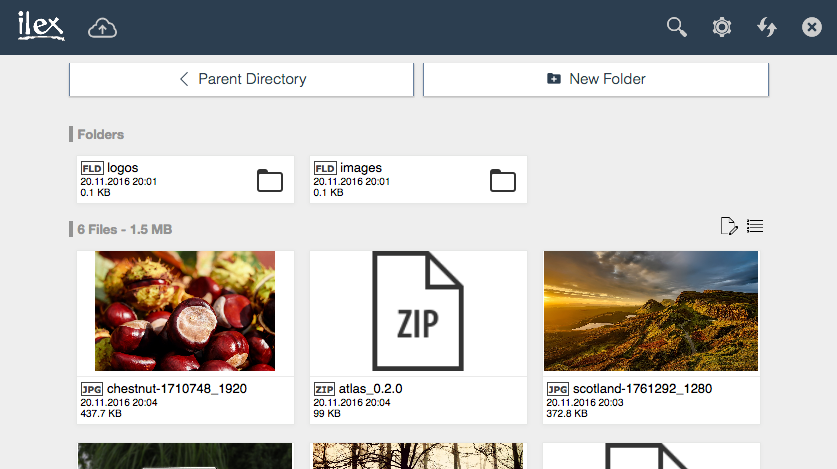


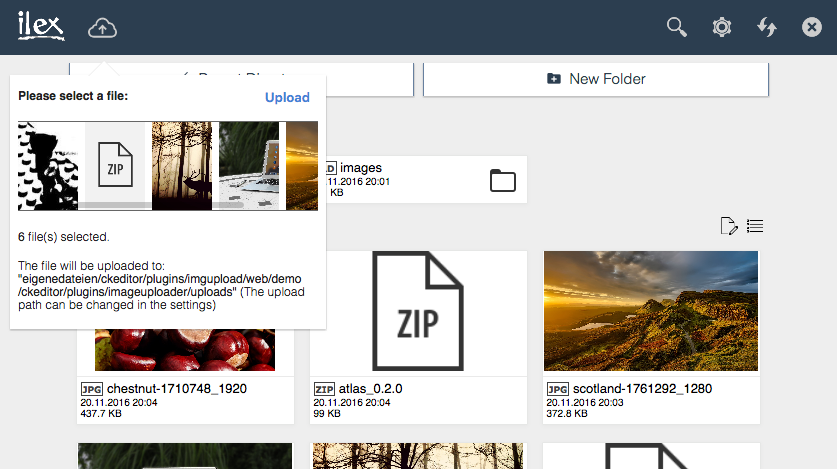

Image Browser for CKEditor l 28.05.2019 01:42 l Moritz Maleck
The year 2018 was somehow different from all the other years so far. Throughout I worked a lot on the new version of the Image Uploader and Browser for CKEditor, now called ilex Web File Manager and put hours of work into this project, I am now struggeling a bit. Due to legal aspects in Germany und due to my commitment [...]
Image Browser for CKEditor l 21.08.2017 23:39 l Moritz Maleck
Update (21.08.2017): The project is currently delayed, but the release is still planned this year. We are now testing the new version. We apologise for any inconvenience. Original article (08.11.2016): You haven't heard anything from me for quite a long time now, and the last update for the Image Uploader [...]
Copyright © 2015-2019 by Moritz Maleck
Icon pack by Icons8 l Impressum l Datenschutzerklärung
Image Uploader and Browser for CKEditor is licensed under the MIT license:
http://en.wikipedia.org/wiki/MIT_License