Video Ts Player -

However, the Video TS player persists in three crucial niches. First, refuse to use lossy compression; they preserve the Video TS structure as a bit-perfect forensic copy of the original disc. Second, home theater enthusiasts who own hardware upscalers (like the Nvidia Shield or high-end Blu-ray players) prefer playing Video TS folders because the player can send the raw MPEG-2 video signal to the upscaler without re-encoding. Third, DVD authoring professionals need to test their menus, chapter points, and navigation commands before burning a master disc; a Video TS player acts as a software-based verification tool. Conclusion The Video TS player is more than a utility; it is a digital archaeologist’s tool. It respects the original intent of DVD authors, preserving not just the pixels and audio samples, but the interactive logic that turned a movie into an experience. While the world has moved toward the convenience of streaming and the efficiency of MP4, the Video TS player stands as a testament to a time when physical media was king and a film’s menu was as curated as its cinematography. For the average user, it is an obsolete curiosity. For the collector, it is the only way to truly watch a digital backup of their disc collection—not just as video, but as a fully functional, chapter-jumping, subtitle-switching, menu-driven artifact of late 20th-century digital culture. As long as DVDs remain in closets and on hard drives, the Video TS player will remain an essential, if esoteric, piece of software.

A Video TS Player is not merely a piece of software; it is a virtual DVD drive and a sophisticated interpreter of legacy code. To understand its function, one must first understand the beast it tames: the folder. When a commercial DVD is ripped to a hard drive without compression (using tools like MakeMKV or DVD Decrypter), it does not become a single file. Instead, it becomes a specific directory containing a set of proprietary file types: .VOB (Video Object), .IFO (Information), and .BUP (Backup). These files work in concert to deliver not just video and audio, but also menus, chapter stops, multiple language tracks, subtitle streams, and copy-protection flags. A standard media player, such as VLC in its basic file-mode or Windows Media Player, will struggle with this folder; it might play a single .VOB file out of order, ignore the menus, or fail to switch audio tracks. The Video TS Player solves this by reading the .IFO file first, which acts like a table of contents and navigation map, allowing the software to reconstruct the DVD experience exactly as the author intended. The Core Mechanics of Playback What differentiates a dedicated Video TS player from a generic video player is its handling of navigation and structure . When you point a capable player (such as VLC’s "Open Disc" mode, Kodi, or PowerDVD) to a Video TS folder, it initiates a specific sequence. First, it locates the VIDEO_TS.IFO file, which contains the First Play Program Chain (PGC). This tells the player what to do immediately: play a copyright warning, run a studio logo animation, or jump straight to the main menu. Subsequently, the player parses the VTS_XX_0.IFO files for each title set. This allows the user to select a specific "Title" (the main movie, a special feature, or a deleted scene) via a graphical menu rendered by the player from the .VOB files. video ts player

Crucially, a good Video TS player emulates the of a hardware DVD player. This means it respects the "angle" blocks (for multi-angle shots), seamlessly branches to different segments of the disc (e.g., for director’s cuts or seamless branching), and executes pre-commands and post-commands stored in the IFO files. For example, if a DVD menu has a "Play Movie" button that is programmed to first set a register to "English 5.1" before jumping to Chapter 1, the Video TS player must execute that tiny piece of virtual machine code. Without this, the folder is just a collection of .VOB files; with it, the folder becomes a functional DVD. Prominent Examples and Feature Sets While many applications claim to play DVD folders, true mastery of the Video TS format is rarer. The most ubiquitous example is VLC Media Player . While VLC is famous for playing broken or incomplete files, its "Open Disc" function—specifically selecting the "DVD (Menus)" radio button and browsing to the Video TS folder—transforms it into a highly capable navigator. It renders menus, supports chapter selection, and handles subtitles effectively, though its menu rendering can sometimes be imperfect for complex, animated menus. However, the Video TS player persists in three

In the age of seamless streaming and compressed digital files like MP4 and MKV, the humble Video TS folder feels like a relic from a bygone era. Yet, for millions of physical media collectors, archivists, and home theater enthusiasts, the Video TS structure remains the gold standard for perfect, uncompressed video backup. At the heart of interacting with this format lies the Video TS Player —a specialized software tool that bridges the gap between the complex, folder-based structure of DVD data and the fluid experience of watching a movie. Third, DVD authoring professionals need to test their

However, the Video TS player persists in three crucial niches. First, refuse to use lossy compression; they preserve the Video TS structure as a bit-perfect forensic copy of the original disc. Second, home theater enthusiasts who own hardware upscalers (like the Nvidia Shield or high-end Blu-ray players) prefer playing Video TS folders because the player can send the raw MPEG-2 video signal to the upscaler without re-encoding. Third, DVD authoring professionals need to test their menus, chapter points, and navigation commands before burning a master disc; a Video TS player acts as a software-based verification tool. Conclusion The Video TS player is more than a utility; it is a digital archaeologist’s tool. It respects the original intent of DVD authors, preserving not just the pixels and audio samples, but the interactive logic that turned a movie into an experience. While the world has moved toward the convenience of streaming and the efficiency of MP4, the Video TS player stands as a testament to a time when physical media was king and a film’s menu was as curated as its cinematography. For the average user, it is an obsolete curiosity. For the collector, it is the only way to truly watch a digital backup of their disc collection—not just as video, but as a fully functional, chapter-jumping, subtitle-switching, menu-driven artifact of late 20th-century digital culture. As long as DVDs remain in closets and on hard drives, the Video TS player will remain an essential, if esoteric, piece of software.

A Video TS Player is not merely a piece of software; it is a virtual DVD drive and a sophisticated interpreter of legacy code. To understand its function, one must first understand the beast it tames: the folder. When a commercial DVD is ripped to a hard drive without compression (using tools like MakeMKV or DVD Decrypter), it does not become a single file. Instead, it becomes a specific directory containing a set of proprietary file types: .VOB (Video Object), .IFO (Information), and .BUP (Backup). These files work in concert to deliver not just video and audio, but also menus, chapter stops, multiple language tracks, subtitle streams, and copy-protection flags. A standard media player, such as VLC in its basic file-mode or Windows Media Player, will struggle with this folder; it might play a single .VOB file out of order, ignore the menus, or fail to switch audio tracks. The Video TS Player solves this by reading the .IFO file first, which acts like a table of contents and navigation map, allowing the software to reconstruct the DVD experience exactly as the author intended. The Core Mechanics of Playback What differentiates a dedicated Video TS player from a generic video player is its handling of navigation and structure . When you point a capable player (such as VLC’s "Open Disc" mode, Kodi, or PowerDVD) to a Video TS folder, it initiates a specific sequence. First, it locates the VIDEO_TS.IFO file, which contains the First Play Program Chain (PGC). This tells the player what to do immediately: play a copyright warning, run a studio logo animation, or jump straight to the main menu. Subsequently, the player parses the VTS_XX_0.IFO files for each title set. This allows the user to select a specific "Title" (the main movie, a special feature, or a deleted scene) via a graphical menu rendered by the player from the .VOB files.

Crucially, a good Video TS player emulates the of a hardware DVD player. This means it respects the "angle" blocks (for multi-angle shots), seamlessly branches to different segments of the disc (e.g., for director’s cuts or seamless branching), and executes pre-commands and post-commands stored in the IFO files. For example, if a DVD menu has a "Play Movie" button that is programmed to first set a register to "English 5.1" before jumping to Chapter 1, the Video TS player must execute that tiny piece of virtual machine code. Without this, the folder is just a collection of .VOB files; with it, the folder becomes a functional DVD. Prominent Examples and Feature Sets While many applications claim to play DVD folders, true mastery of the Video TS format is rarer. The most ubiquitous example is VLC Media Player . While VLC is famous for playing broken or incomplete files, its "Open Disc" function—specifically selecting the "DVD (Menus)" radio button and browsing to the Video TS folder—transforms it into a highly capable navigator. It renders menus, supports chapter selection, and handles subtitles effectively, though its menu rendering can sometimes be imperfect for complex, animated menus.

In the age of seamless streaming and compressed digital files like MP4 and MKV, the humble Video TS folder feels like a relic from a bygone era. Yet, for millions of physical media collectors, archivists, and home theater enthusiasts, the Video TS structure remains the gold standard for perfect, uncompressed video backup. At the heart of interacting with this format lies the Video TS Player —a specialized software tool that bridges the gap between the complex, folder-based structure of DVD data and the fluid experience of watching a movie.

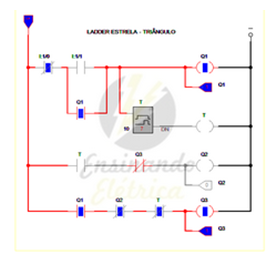
CADe SIMU software elétrotécnico

Por que baixar o CADe SIMU?

Não é necessário nenhum tipo de instalação, você apenas inicia com o arquivo executável, permitindo realizar a inserção de símbolos encontrados em bibliotecas, desenhar um diagrama e posteriormente realizar a simulação deste projeto. Com uma proposta excelente, o CADe SIMU oferece recursos bastante úteis através de uma interface simples e intuitiva e o melhor: sem custos, um software muito leve (algo em torno de 5Mb) capaz de realizar simulação de circuitos de comandos elétricos.

  • Elabore diagramas de comandos elétricos do zero;
  • Realize as simulações e compreenda o funcionamento;
  • Salve, imprima e colecione diversos diagramas elétricos;

O que você esta esperando? Baixe já o CADe SIMU 4.0 em português

Artigos do Blog Ensinando Elétrica

Ensinando Elétrica trata-se de um blog livre, onde trazemos ensinamentos sobre o CADe SIMU e diversos assuntos relacionado a eletricidade, venha conhecer e seja um seguidor para receber conteúdos de elétrica em seu e-mail.

video ts player

Instalar Relé Falta de Fase

A instalação dos relés falta de fase é muito importânte para a proteção do seu motor elétrico e todo o sistema, confira o artigo.