Today, the "Red One Studio" exists as a franchise—satellites in Los Angeles, Stockholm, and Dubai carry the name. But purists argue the magic was specific to that New York basement, where the subway rumble would occasionally bleed into the kick drum track.
The physical space is gone, but its architecture survives in every pop song that uses a massive, danceable drop with a Latin guitar underneath. Red One Studio wasn't just a place to record music; it was the gymnasium where 2010s pop music learned to lift weights. And the echo of that subwoofer hasn't quite faded yet.
However, the studio was also notorious for its discipline. RedOne ran a tight ship. There was no smoking, no entourage, no distractions. You came in at 8 PM, and you left with a demo at 6 AM. The large mirrored wall served a dual purpose: it made the room look bigger, but it also forced artists to watch themselves perform, to sell the song to themselves. As the charts moved away from the maximalist, electro-house boom of the early 2010s toward trap and lo-fi, RedOne Studio began to quiet down. The original Chelsea location closed its physical doors in 2018, a victim of rising Manhattan rents and the producer's shift toward film scoring (the House of Gucci soundtrack) and label management.
But when insiders speak of the magic behind hits like Just Dance , Poker Face , Bad Romance , and On the Floor , they aren’t just talking about the producer. They are talking about a place: .
RedOne famously eschewed the typical "producer cage." The studio was designed for performance . There was no isolated, glassed-off control room looking into a dead vocal booth. Instead, the microphone stood in the same room as the producer. RedOne would stand behind the mic stand, jumping, conducting, shouting encouragement while Lady Gaga or Jennifer Lopez belted into the capsule. This architectural intimacy is why those vocals feel so immediate—you are in the room with the sweat and the euphoria. Acoustically, the studio was tuned for one purpose: the four-on-the-floor hammer. The room was treated to eliminate any standing waves that might muddy the kick drum. At RedOne Studio, the kick didn't just hit your chest; it restarted your heartbeat.
It is said that the microphone in the corner (a vintage Neumann U 87) captured the raw, unhinged guide vocal for Poker Face in a single take because Gaga and RedOne were locked in a "vibe trance." Nicki Minaj allegedly wrote her verse for Starships in 45 minutes in the leather chair by the window while eating sushi.
In the sprawling, neon-drenched landscape of modern pop music, certain sonic fingerprints are unmistakable. There’s the “Timbaland stutter,” the Max Martin “Hey!” chant, and then—perhaps most ubiquitously of the late 2000s and early 2010s—the seismic, stadium-filling thud of RedOne .
More than just a room with a mixing board, Red One Studio (originally located in the Chelsea neighborhood of New York City) was the laboratory where the Swedish-Moroccan producer Nadir Khayat, known as RedOne, forged a new alloy of Euro-pop energy, hip-hop bravado, and Latin rhythm. Walking into the original Red One studio was an assault on the senses in the best possible way. The vibe was part luxury lounge, part military command center. Dark wood paneling contrasted with stark, blinding white LED screens. A massive, custom-built SSL console sat like an altar, but the real relics were scattered on the floor: racks of vintage synthesizers (Juno-106s, Moogs) tangled with the latest digital plug-ins.
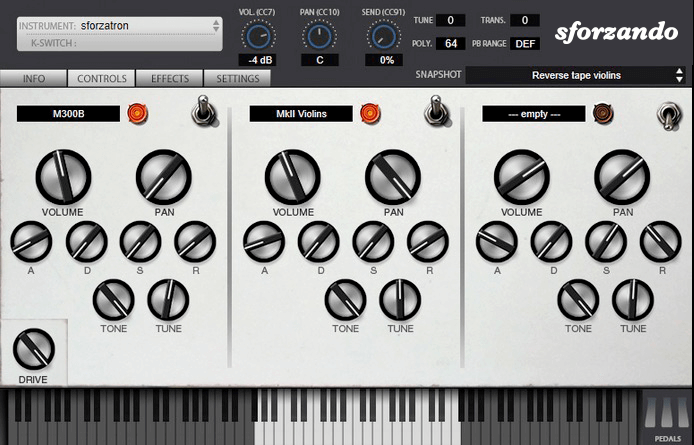
The SFZ Format is widely accepted as the open standard to define the behavior of a musical instrument from a bare set of sound recordings. Being a royalty-free format, any developer can create, use and distribute SFZ files and players for either free or commercial purposes. So when looking for flexibility and portability, SFZ is the obvious choice. That’s why it’s the default instrument file format used in the ARIA Engine.
OEM developers and sample providers are offering a range of commercial and free sound banks dedicated to sforzando. Go check them out! And watch that space often, there’s always more to come! You are a developer and want to make a product for sforzando? Contact us!
You can also drop SF2, DLS and acidized WAV files directly on the interface, and they will automatically get converted to SFZ 2.0, which you can then edit and tweak to your liking!
Download for freeInstrument BanksSupport
Today, the "Red One Studio" exists as a franchise—satellites in Los Angeles, Stockholm, and Dubai carry the name. But purists argue the magic was specific to that New York basement, where the subway rumble would occasionally bleed into the kick drum track.
The physical space is gone, but its architecture survives in every pop song that uses a massive, danceable drop with a Latin guitar underneath. Red One Studio wasn't just a place to record music; it was the gymnasium where 2010s pop music learned to lift weights. And the echo of that subwoofer hasn't quite faded yet.
However, the studio was also notorious for its discipline. RedOne ran a tight ship. There was no smoking, no entourage, no distractions. You came in at 8 PM, and you left with a demo at 6 AM. The large mirrored wall served a dual purpose: it made the room look bigger, but it also forced artists to watch themselves perform, to sell the song to themselves. As the charts moved away from the maximalist, electro-house boom of the early 2010s toward trap and lo-fi, RedOne Studio began to quiet down. The original Chelsea location closed its physical doors in 2018, a victim of rising Manhattan rents and the producer's shift toward film scoring (the House of Gucci soundtrack) and label management. red one studio
But when insiders speak of the magic behind hits like Just Dance , Poker Face , Bad Romance , and On the Floor , they aren’t just talking about the producer. They are talking about a place: .
RedOne famously eschewed the typical "producer cage." The studio was designed for performance . There was no isolated, glassed-off control room looking into a dead vocal booth. Instead, the microphone stood in the same room as the producer. RedOne would stand behind the mic stand, jumping, conducting, shouting encouragement while Lady Gaga or Jennifer Lopez belted into the capsule. This architectural intimacy is why those vocals feel so immediate—you are in the room with the sweat and the euphoria. Acoustically, the studio was tuned for one purpose: the four-on-the-floor hammer. The room was treated to eliminate any standing waves that might muddy the kick drum. At RedOne Studio, the kick didn't just hit your chest; it restarted your heartbeat. Today, the "Red One Studio" exists as a
It is said that the microphone in the corner (a vintage Neumann U 87) captured the raw, unhinged guide vocal for Poker Face in a single take because Gaga and RedOne were locked in a "vibe trance." Nicki Minaj allegedly wrote her verse for Starships in 45 minutes in the leather chair by the window while eating sushi.
In the sprawling, neon-drenched landscape of modern pop music, certain sonic fingerprints are unmistakable. There’s the “Timbaland stutter,” the Max Martin “Hey!” chant, and then—perhaps most ubiquitously of the late 2000s and early 2010s—the seismic, stadium-filling thud of RedOne . Red One Studio wasn't just a place to
More than just a room with a mixing board, Red One Studio (originally located in the Chelsea neighborhood of New York City) was the laboratory where the Swedish-Moroccan producer Nadir Khayat, known as RedOne, forged a new alloy of Euro-pop energy, hip-hop bravado, and Latin rhythm. Walking into the original Red One studio was an assault on the senses in the best possible way. The vibe was part luxury lounge, part military command center. Dark wood paneling contrasted with stark, blinding white LED screens. A massive, custom-built SSL console sat like an altar, but the real relics were scattered on the floor: racks of vintage synthesizers (Juno-106s, Moogs) tangled with the latest digital plug-ins.