epanet-js

Oriya Bhauja- Aunty- House Wife Mms -

No installs. No forced cloud storage. Just fast, local-first water modeling — powered by the engine you already trust.

The EPANET user's dilemma

  • Classic EPANET is powerful — but clunky and outdated. Workarounds become your workflow — slow and cumbersome.
  • Big-name platforms look polished, but they're overpriced and bloated with features you don't need to analyze your network quickly.
  • Modern browser-based tools exist — but they force your data into the cloud, raising privacy and compliance concerns. Plus, they offer little for those doing long-term planning and analysis.

You shouldn't have to choose between speed, security, and affordability just to understand your water networks.

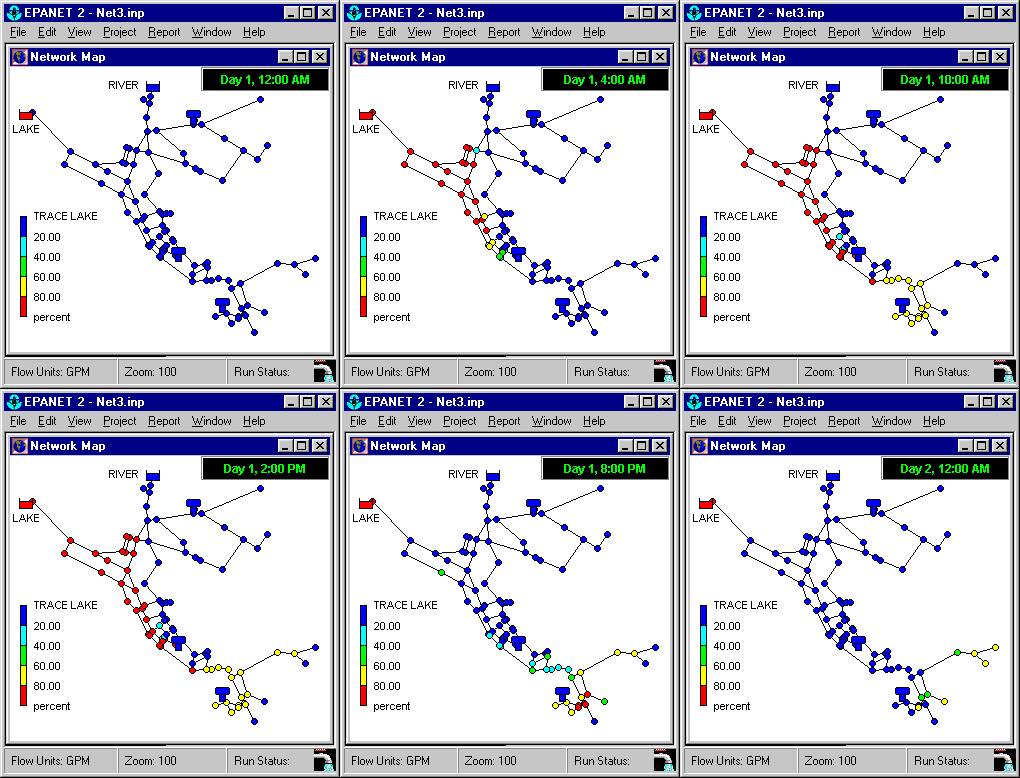
Old EPANET UI
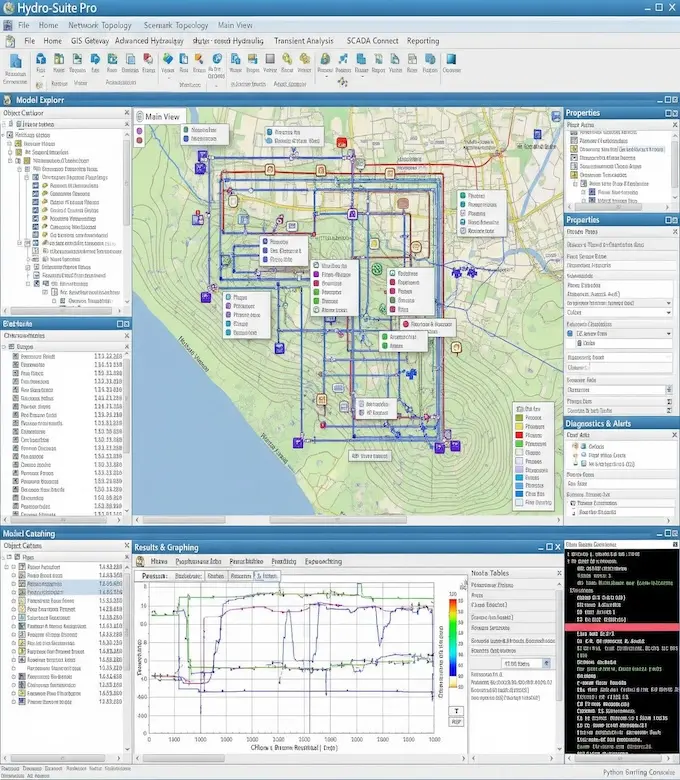
Complex Modeling App

Oriya Bhauja- Aunty- House Wife Mms -

That evening, her aunt called from Chennai. “Still not married? At twenty-three, I had two children.” Anjali passed the phone to her mother, who rolled her eyes but listened patiently. Later, Meera came to her room with a cup of ginger tea. “I was married at eighteen,” she said softly. “I never got to stand where you stand. So stand tall. But don’t forget to bend a little. The world still expects it.”

At 9 AM, she changed into a kurta and jeans—her armor for the corporate world. The auto-rickshaw driver called her “modern miss” but still asked if she cooked well. She smiled and said nothing. She had learned to choose her battles. Oriya Bhauja- Aunty- House Wife Mms

Under the heavy monsoon sky of Kerala, twenty-three-year-old Anjali balanced a brass lamp in one hand and her smartphone in the other. The lamp was for the evening prayer—a tradition her grandmother had never missed. The phone buzzed with a meeting reminder from her Bengaluru-based tech job. For a moment, she stood at the threshold of her ancestral home, feeling the pull of two worlds. That evening, her aunt called from Chennai

Her mother, Meera, appeared behind her, adjusting the wet end of her cotton saree. “The deepam first, then your laptop,” she said, not unkindly. It was a compromise they had perfected over years—faith and ambition, side by side. Later, Meera came to her room with a cup of ginger tea

Her office was a glass building overlooking a tech park. Here, she was just another project manager. But during lunch, her colleague Priya whispered about the rishta her parents had sent—a boy from Delhi, an engineer settled in Texas. “They say he’s very adjusting ,” Priya laughed bitterly. Anjali laughed too, knowing that “adjusting” was the most loaded word in an Indian woman’s vocabulary. It meant swallowing dreams in small, digestible bites.

Outside, the rain had stopped. Inside, she was still learning how to be both—a keeper of flames and a chaser of light.

Anjali’s day began before sunrise, not with silence but with the clatter of steel utensils and the low hum of her father’s chanting. In the kitchen, she chopped vegetables for sambar while answering a client’s email on her phone. Her younger sister, Kavya, was in Mumbai studying law, and she often sent voice notes about late-night library sessions and boyfriends her parents didn’t yet know about. “Don’t tell Amma,” Kavya would say. Anjali never did. Some secrets were a sister’s currency.
Model water networks instantly.

No setup or downloads — just instant access right in your browser.

Start modeling now

EPANET deserves better — and so do you.

EPANET was a gift to the industry — free, open-source water modeling for all. But commercial vendors built on it, locked away improvements, and left the community behind.

epanet-js is our answer: a faster, simpler, affordable water modeling tool that protects your privacy and sustains the open-source future of water modeling.

We're proud to be part of the next chapter — and we're just getting started.

EPA logo
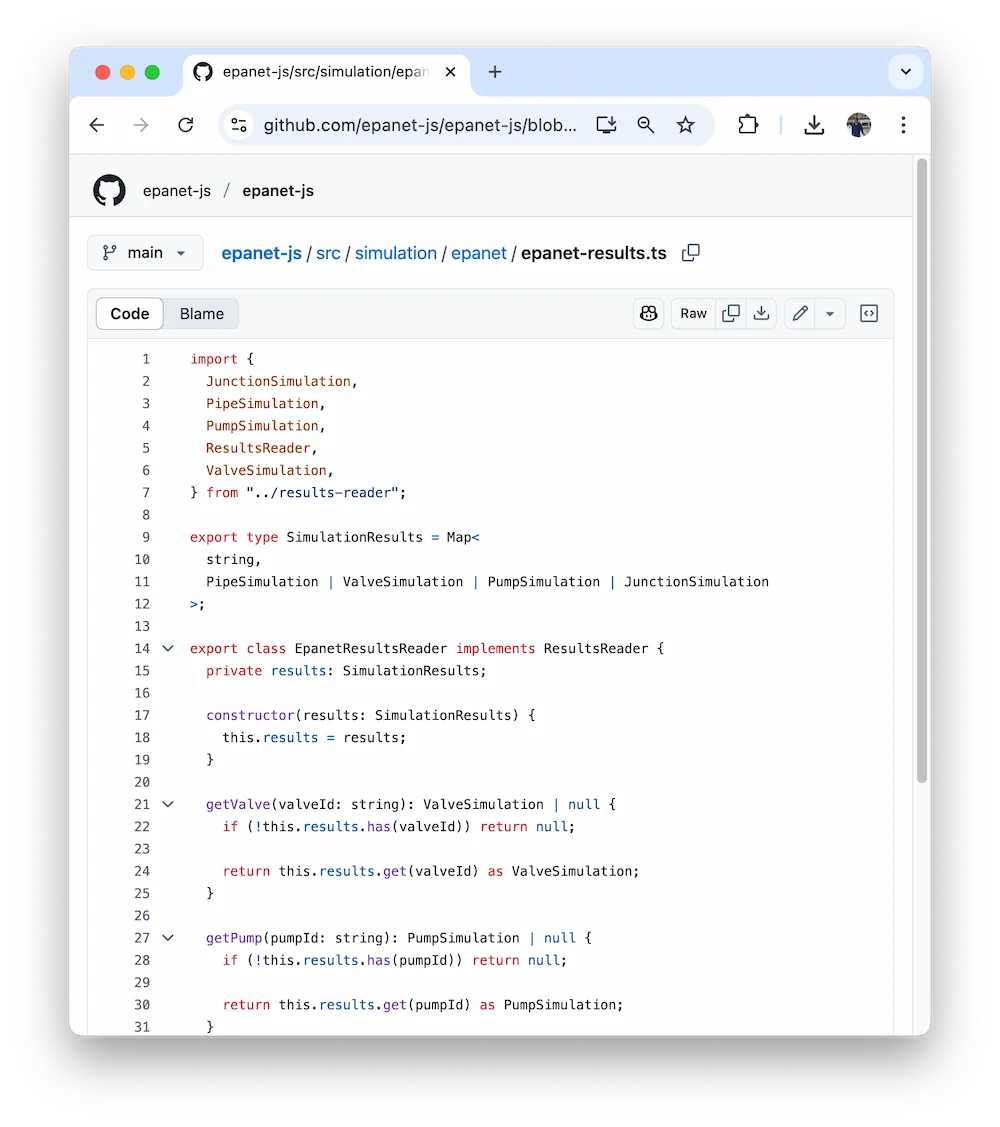
Source code of epanet-js on GitHub

When you support epanet-js, you support EPANET.

When you purchase more features in epanet-js, you're investing in the future of open-source EPANET development.

Our open-source model balances innovation and accessibility:

Anyone can build on our code. The two-year commercial-use delay gives us the incentive to keep pushing forward — and that fuels progress for everyone.

That means when you support us, you support more affordable hydraulic modeling software for the entire community.

Simple, transparent pricing for every kind of modeler.

Choose the plan that works for you

Free

For everyone.$0 /year

  • Web based EPANET model
  • Background maps and satellite
  • Automated Elevations
  • No limits on sizes
  • Community Support

ProMost popular

For solo modelers and small utilities.$950 /year

Individual named license

Everything in free, and:
  • Scenarios
  • Professional support
  • Custom layers
Coming soon:
  • Cloud storage
  • Point in time restore - 30 days
  • Demand Analysis

Teams

For teams that build together.$2500 /year

Floating shared license

Everything in Pro, and:
  • Priority support
  • Volume discounts
  • Pay by invoice
Coming soon:
  • Team storage
  • Point in time restore - 90 days
  • Sharing of networks

Have questions? or book a call.

Special access for personal and educational use

Available for non-commercial projects, learning, and student work.

Personal

$100/year

For curious minds and personal growth.

Everything in pro, but:
  • Community support only
  • Non-commercial usage

Education

$0/year

Free for students and teachers.

Everything in pro, but:
  • Community support only
  • Non-commercial usage

Frequently asked questions

Find answers to common questions about epanet-js.

Just open your browser and model.

No install. No login. No cloud required.

Launch epanet-js now

You may not know this, but for decades, the U.S. EPA has given the water industry an extraordinary gift: the free and open-source hydraulic modeling software EPANET. Odds are, if you've used any commercial hydraulic modeling software today, it was built on the EPANET engine.

The problem is, instead of giving back to their open-source roots like other industries do, big-name software vendors took EPANET's open code, built private tools on top of the engine, and then locked those improvements behind patents and proprietary licenses.

Some vendors even pressured the EPA to focus only on the engine — discouraging any effort to improve the interface or user experience for everyone else.

Those vendors now charge you exorbitant prices to use their software while EPANET lags behind — and utilities, engineers, and educators with smaller budgets suffer.

We think this is backwards — and we're on a mission to change it. We're focused on creating a better experience for the entire hydraulic modeling community.

That's why we built epanet-js under an FSL license — because we want to give you an affordable, easy-to-use water modeling option that creates a sustainable future for open-source EPANET development.

Support EPANET by using software that supports it back.

A better future for water modeling.

Simple, quick, and useful right out of the gate — designed to open-and-go.

Launch epanet-js now