|
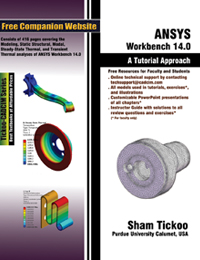
ANSYS
Workbench 14.0: A Tutorial Approach
|
New Material Added
to This Page |
|
ANSYS
Workbench 14.0: A Tutorial Approach
|
New Material Added
to This Page |
|
Description
The following are some additional features of this
book:
Brief Table
of Contents |
This technique echoes the literary tradition of , where a story contains a smaller version of itself, thereby creating a recursive loop of meaning. The sketches also function as visual haiku —concise, evocative snapshots that capture emotional essence without exposition. 2.2 Non‑Linear Chronology While the first season followed a relatively linear prison‑to‑outside‑world arc, Somme Sketcher shuffles temporal anchors. Flashbacks, flash‑forwards, and “what‑if” alternate realities appear side by side. The series employs a temporal mosaic that mirrors the fragmented psyche of its protagonists: memories of past crimes interlace with present guilt and future dread.
The subtitle also reflects the series’ structural experiment: each episode is presented as a “sketch”—a fragmentary, sometimes incomplete scene—culminating in a “sum” that the audience must piece together. This approach aligns with a broader trend in Turkish streaming content toward non‑linear, anthology‑like storytelling. Mahkum Günahkarlar 2 was produced by the independent studio Karanfil Media , known for its daring visual style and willingness to push censorship boundaries. The production team recruited Mert Yıldırım , a cinematographer celebrated for his work on the award‑winning film Karanlıkta Kalanlar , to craft a gritty, hyper‑real aesthetic. The music score, composed by Leyla Şahin , blends traditional Turkish instruments with industrial noise, reinforcing the tension between cultural heritage and modern alienation. 2. Narrative Architecture 2.1 The “Sketch” Motif Each episode opens with a brief, static tableau—a “sketch” of a location (a cell, a courtroom, a deserted railway station). The camera lingers, allowing the audience to absorb details before the narrative dissolves into motion. The sketches are not merely visual; they are also narrative “sketches”: scenes that start in medias res, often without clear context, requiring viewers to infer backstory from dialogue, props, and environmental cues. Mahkum Gunahkarlar 2 - Somme Sketcher
The non‑linear structure is not merely stylistic; it serves to emphasize the cyclical nature of sin and punishment. By showing a character’s present actions before revealing the trigger event, the series forces viewers to confront the moral ambiguity of cause and effect. A recurring motif is the presence of a “sketchbook” —a literal bound notebook that appears in multiple characters’ hands. In some episodes, characters write down their own confessions; in others, the notebook is used to draw schematics of escape routes. The sketchbook becomes a diegetic artifact that binds the narrative’s layers together, symbolizing both a record of sin and an instrument of possible redemption. 3. Thematic Exploration 3.1 Sin and the Inexorable Sum The core theme—sin as an accumulating sum—is explored through both plot and visual metaphor. The series posits that each transgression adds to an ever‑growing ledger, a Somme , that eventually overwhelms the individual. This is illustrated by a recurring visual: a blackboard on which a chalk‑written tally of crimes is incrementally updated. The tally is never erased; it expands, reinforcing the notion that redemption is not simply a subtraction but a transformation of the total. 3.2 State Violence and Institutional Corruption Somme Sketcher intensifies the critique of state apparatuses introduced in the first season. The “sketch” of a courtroom reveals a judicial theater where verdicts are pre‑written, and the judge’s gavel is a stylus that marks the sketchbook. The series suggests that the state itself is an artist, crafting narratives that legitimize violence. This technique echoes the literary tradition of ,