
Hercules-390 Version 4 〈480p 2027〉
Furthermore, Version 4’s modular channel subsystem architecture emulated a wide array of control units: 3270 terminals, 3420 tape drives, 3490 cartridges, and 3380/3390 DASD. For the first time, a full Sysplex (with multiple emulated LPARs communicating over virtual CTC adapters) could be simulated on a single Linux server. System automation tools like NetView and OPS/MVS could be tested and trained upon without reserving a physical mainframe partition. No essay on Version 4 would be complete without acknowledging its constraints. The emulator, by design, focuses on the ESA/390 architecture, not the later z/Architecture (64-bit). Thus, it cannot run z/OS versions beyond 1.x that require 64-bit addressing. Additionally, while Version 4 emulates CPU and I/O faithfully, it does not emulate cryptographic coprocessors (CPACF, Crypto Express) at a functional level, limiting its use for fully secure, encrypted workloads.
Performance saw a quantum leap through threaded interpretation and dynamic basic block chaining. While earlier versions relied on a simple instruction fetch-decode-execute loop, Version 4 implemented a just-in-time (JIT)-like translation mechanism for frequently executed code sequences. On a modern multi-core Intel or AMD processor, a Hercules-390 Version 4 instance could outperform a physical 1990s CMOS mainframe by a factor of ten to twenty, turning a $500 desktop into a virtual data center powerhouse. One of the most profound impacts of Hercules-390 Version 4 was its role as a digital preservation tool . Countless organizations had legacy data and applications trapped on aging System/390 hardware—machines with failing power supplies, magnetic tape drives, and proprietary disk packs. Version 4 provided a migration path: using tools like dasdload and tape2file , administrators could create exact disk and tape images from physical media and run them unaltered on the emulator. hercules-390 version 4
Licensing also remains a nuanced issue. While Hercules itself is open source (QPL), the operating systems and middleware that run on it are proprietary IBM property. Version 4 cannot circumvent license keys or EULAs; it merely provides the canvas. Users must legally obtain IBM software—often through the Turnkey MVS distribution of public-domain OS releases or academic licenses. Released in the late 2000s and maintained through the early 2010s, Hercules-390 Version 4 represents a high-water mark of open source fidelity to a complex proprietary architecture. Its codebase influenced subsequent emulators in other domains (SIMH for DEC, QEMU for various architectures) and provided a reference implementation for ESA/390 that IBM itself has acknowledged as a valuable compatibility tool. No essay on Version 4 would be complete
In the landscape of enterprise computing, the mainframe remains a titan—synonymous with unrivaled reliability, scalability, and transactional throughput. For decades, the IBM Z platform has powered the world’s financial systems, airline reservations, and healthcare records. Yet, for students, hobbyists, and even legacy-reliant organizations, gaining access to this ecosystem has traditionally required prohibitively expensive hardware and licensing agreements. Enter Hercules-390, an open-source software emulator that democratized mainframe computing. Among its many iterations, Hercules-390 Version 4 stands as a landmark release: a mature, robust, and feature-complete bridge between the golden age of System/390 and the modern era of commodity hardware. The Architecture of Accessibility At its core, Hercules-390 Version 4 is a precision emulator capable of running unmodified IBM operating systems, including MVS, OS/390, VM/CMS, and even Linux for z/Architecture. What distinguishes Version 4 from its predecessors is a profound refinement of three critical areas: instruction accuracy , performance optimization , and cross-platform portability . Additionally, while Version 4 emulates CPU and I/O
Today, while later versions (3.13, 4.1, 4.2) have added minor fixes, the architectural choices and performance innovations of Version 4 remain the gold standard. It turned the mainframe from an inaccessible relic into a virtual playground for learning, a lifeline for legacy migration, and a testament to the power of reverse engineering driven by passion rather than profit. Hercules-390 Version 4 is more than an emulator; it is a preservation engine and a pedagogical cornerstone . It proved that the formidable complexity of IBM’s ESA/390 instruction set could be mastered by a community of volunteers and that the result could run with reliability and speed rivaling original hardware. For the sysprog nostalgic for the green-on-black glow of a 3278 terminal, or the student curious about the backbone of global finance, Hercules-390 Version 4 remains the most faithful and accessible window into a computing tradition that still underpins the modern world.
Version 4 achieved a near-flawless implementation of the ESA/390 architecture’s complex instruction set. Prior versions occasionally stumbled on edge-case instructions or esoteric privileged operations, causing crashes or unpredictable behavior in production-grade software. With Version 4, the development team closed those gaps, enabling the emulator to pass rigorous self-checking diagnostics such as the IBM internal CPU tests. For the first time, an open-source emulator could claim "cycle-true" behavior for the vast majority of standard workloads.
Moreover, Version 4 introduced enhanced console support via the hercules HTTP server and integrated telnet line-mode terminals. This allowed a modern network of users to connect to a single emulated mainframe, each accessing a 3270 terminal session through a web browser or open-source tn3270 client. The democratization was staggering: a university computer science department could now teach JCL, COBOL, and CICS without a million-dollar IBM contract. Hercules-390 Version 4 also excelled as a development and testing platform. Its dynamic debugging features—such as the pr (probe) and diag commands—gave system programmers visibility into the internal state of the CPU, memory, and I/O channels at a level rarely available even on real hardware. This catalyzed a renaissance in hobbyist operating system development and revitalized interest in mainframe assembly language.


Hola, muy buen post. Me sirvió mucho. Eso si, creo que hayun pequeño error de tipeo:
“Contractivos (Δu>1): Tienden a consolidar. Se da en suelos sueltos y arcillas normalmente consolidadas (NC).
Dilatante (Δu0y Δu<0 cierto??
Gracias
Hola, Esteban
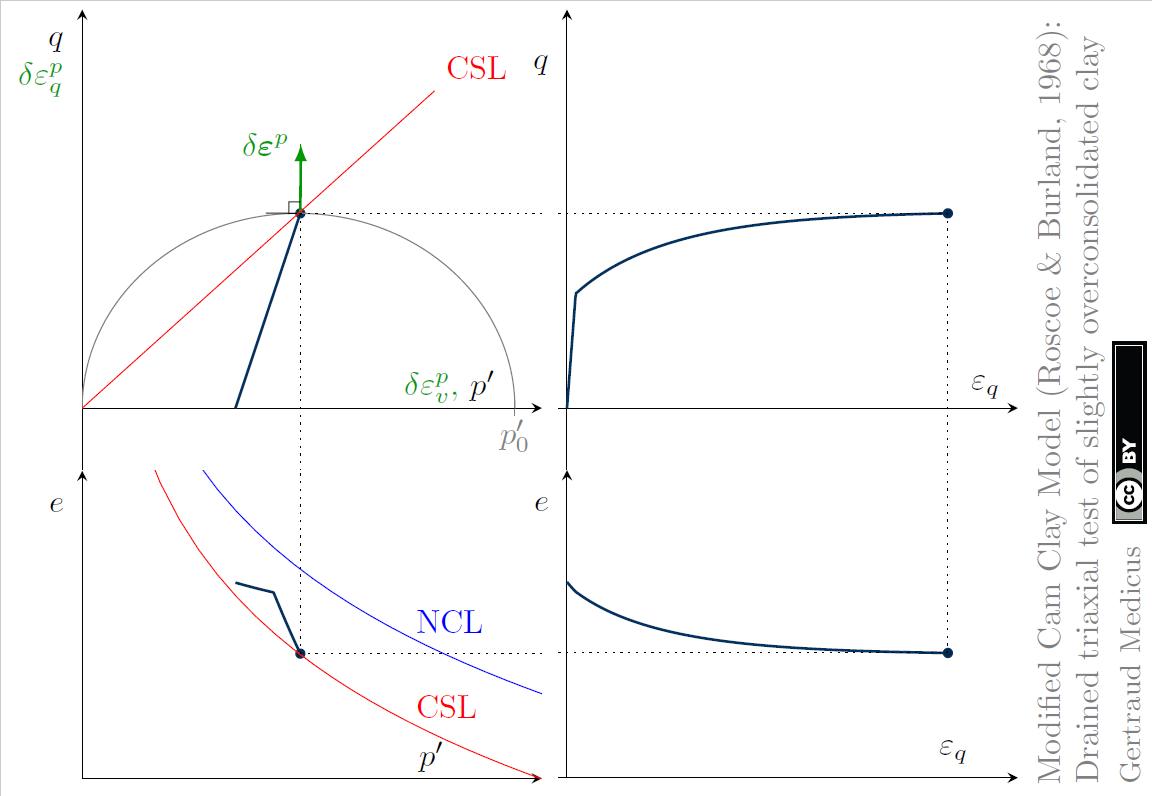
Me alegro que te haya servido. En este caso no hay un error, en los suelos contractivos, cuando se ejerce la carga aumentan las presiones de poro. Al revés con los dilatantes.
Saludos.
Creo que se refiere a que en la imagen el valor critico para la dilatancia o contraccion es el 0 y luego en el texto es 1.
Eso si, muy buen post, simple dentro de lo complejo.
Hola, Benjamin.
Es cierto que se contradice. Lo reviso, gracias!
Buenos días,
Como se determinan las presiones de cámara en un ensayo triaxial CD, cuando de van a ensayar las 3 probetas? Cual es proporción de incremento adecuada entre cada una de esas presiones? Gracias
Hola, pues eso depende de tu proyecto.
Hay que preguntarse en qué condiciones estará sometido el suelo durante la construcción y la puesta en servicio.
Normalmente la primera es la actualmente tiene in situ, en función de su profundidad. La tercera sería las condiciones de servicio, por ejemplo, cuando construyamos la presa o el terraplen, o entre en carga la cimentación. La segunda, pues uno intermedio.
Saludos.
Ignacio
Gracias amigo. Solo me ha quedado una duda con el ensayo UU. En el blog mencionas que debe saturarse primero. Me parece que esa no es una condición estrictamente valida, ya que se entiende que el ensayo rápido no da tiempo para que el material sature, como ejemplo puede ser el realizar el ensayo UU y representar que sucederia si estas construyendo un dique y necesitas saber las condiciones de estabilidad. Sin embargo, el saturar la muestra, y luego ensayarla te podria dar valores menores de parámetros de resistencia cortante y utilizar ello para tu análisis y ser conservador. Yo considero que antes de realizar un ensayo es importante comprender como se va comportar el suelo y en función a ello desarrollar el análisis. Muchas gracias por tu blog, me he tomado el tiempo de leer, me quedan algunos pasos por profundizar pero muy bueno.
Martin, es necesario saturar el material de lo contrario va a haber efectos de succión que no pueden ser medidos y no es posible generar el analisis de esfuerzos efectivos que se necesita para determinar los valores de resistencia.
Hola Nacho, para mi este ensayo es muy importante y hay cosas que se hacen por costumbre pero que se pueden cambiar a mejor. Me explico, la presión de poro, por ejemplo, siempre se puede medir en la célula triaxial tanto si se hace un ensayo UU, como uno CD, el asunto radica en configurar el equipo y los sensores convenientemente.
Para mí, si cuando se hace un triaxial se le diera al cliente los datos de los sensores además de las curvas de rotura, el cliente podría comprobar si el ensayo realmente es UU o CD ya que muchas veces la elección de velocidades de rotura no son correctas, la nuestra drena mal por lo que sea, etc.
En resumen, este ensayo tan importante debe realizarse por técnicos especializados tanto en laboratorio, como en cálculo de resultados.
La formación es muy importante!!!